Picture the scene. It’s Cornwall, England, in 1871. For thirty years, the merchants of Penzance had watched ships founder on the Black Rocks. The jagged reef lurked just beneath the surface at high tide, invisible in fog or darkness, waiting. Sixteen vessels had been lost there. Seventy-three souls claimed by the sea.
The Board of Trade finally authorised construction of a lighthouse in the spring of 1871. Local stonemasons cut granite from the cliffs. Engineers surveyed the highest promontory overlooking the reef. Through summer and autumn, the tower rose; forty feet of dressed stone, crowned with an iron gallery and lamp room.
By December, it stood complete. Just a building. Stone and iron and glass, no different from a dozen other structures along that coast.
On the morning of December 18th, 1871, two men stood at the base of that tower as officials from Trinity House gathered for the dedication. Thomas Wren, forty-six, a former fisherman who knew those waters better than his own face. And young Samuel Hodge, nineteen, who’d buried his father and two brothers in the churchyard after they’d drowned on the Black Rocks five years earlier.
The Deputy Master read the commission: “Henceforth this station shall be known as St. Anthony’s Light, dedicated to the preservation of life at sea.” He turned to Wren and Hodge. “You are charged with the keeping of this light. In storm and calm, in sickness and health, the light must not fail. Upon your faithfulness, lives depend.”
They affixed the brass plate to the tower’s entrance. They handed Wren and Hodge the great iron key. And in that moment, everything changed.
The building was no longer simply stone and glass. It was set apart for a singular purpose. The door that had stood open now bore a lock; this was not a place for casual visitors or Sunday picnics. Every item carried up those spiral stairs; oil, wicks, cleaning cloths, the leather-bound log, existed for one reason only.
And Wren and Hodge? Their lives were no longer their own. When the January gales came shrieking in from the Atlantic, they could not abandon their post, could not seek shelter in the village below. When Wren’s wife fell ill that winter, he could not leave; not until his relief arrived. When Hodge’s hands cracked and bled from the cold, from the endless polishing of the great Fresnel lens, he did not stop. Their behaviour wasn’t arbitrary. It flowed from the identity of the place they inhabited, from the charge they had accepted.

On the night of February 3rd, 1872, a winter storm struck. Winds tore at the tower. Rain lashed the glass. Through the darkness, Wren and Hodge watched a schooner fighting the tempest, driven steadily toward the Black Rocks.
The ship’s captain saw the light. He saw it pierce the darkness, marking the reef, showing him where death waited. He hauled the wheel hard to starboard. The schooner’s timbers groaned. She came about, missing the rocks by twenty yards.
At dawn, when the storm broke, the schooner limped into Penzance harbour, all her crew accounted for.
They didn’t say, “We saw a building with a lamp.”
They said, “St. Anthony’s Light saved us.”
The lighthouse’s very existence as a lighthouse; its set-apartness, its dedication to a singular, sacred purpose, had made it capable of saving lives.
This is the meaning behind the Hebrew word qadosh.
Not the moral perfection of the stones. Not the spiritual superiority of the keepers. But designation, commission, consecration to a single purpose. The lighthouse shows us what qadosh looks like in practice something withdrawn from common use, designated for a singular purpose, and functioning exactly as commissioned. And the keepers embodied the same pattern, their lives reoriented around a charge they had accepted.
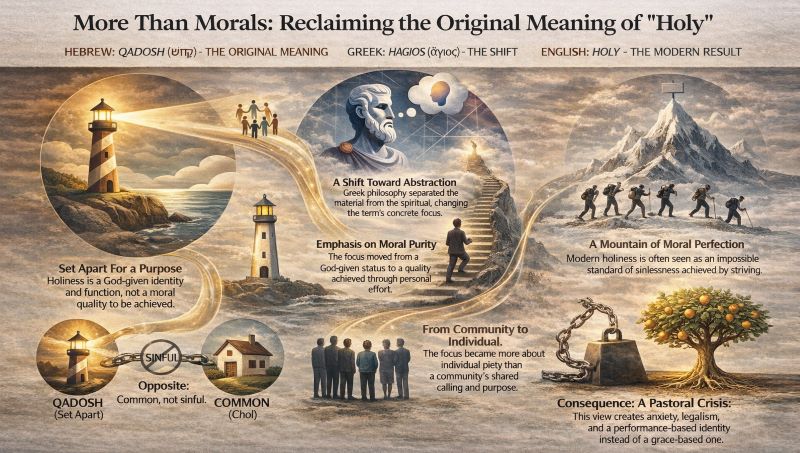
The Hebrew concept of qadosh was concrete, relational, and vocational. But something shifted when the Hebrew Scriptures were translated into Greek, and that shift has had a profound effect on the way we think about holiness ever since.
The Greek word most commonly used to translate qadosh is hagios (ἅγιος), which does mean ‘holy,’ ‘sacred,’ or ‘set apart.’ So far, so good. The semantic overlap is real. But Greek philosophy had a very different way of thinking about such categories. Greek thought tended toward abstraction. It loved to separate concepts; body from soul, material from spiritual, physical from metaphysical. And increasingly, Greek-influenced Christianity began to think of holiness primarily in moral and spiritual terms, detached from the embodied, communal, covenant reality that the Hebrew Scriptures presented.
Where Hebrew emphasised belonging and purpose, Greek emphasis drifted toward moral purity. Where Hebrew saw holiness as a status granted by God’s claim, Greek thinking leaned toward holiness as a quality achieved through personal effort. Where Hebrew holiness was fundamentally about relationship with the Holy One, Greek categories made it increasingly individualistic and internal.
By the time we get to English, this drift has become nearly complete. When we hear ‘holy,’ we think ‘morally perfect’. We think ‘spiritual’ rather than ‘set apart for service’. We think ‘individual piety’ rather than “covenant community called to embody God’s ways.”
The question, then, is how we go about recovering the Hebrew understanding? And the answer is to return to Scripture itself and see how holiness actually functions, beginning with the holiness of God Himself, and further back still, with the very structure of creation.
Isaiah’s vision in the temple gives us one of Scripture’s most vivid and arresting pictures of what it actually looks and feels like to encounter the holiness of God. The prophet sees the Lord seated on His throne, the train of His robe filling the temple, and the seraphim crying out, “Holy, holy, holy is the Lord of hosts; the whole earth is full of his glory!” (Isaiah 6:3).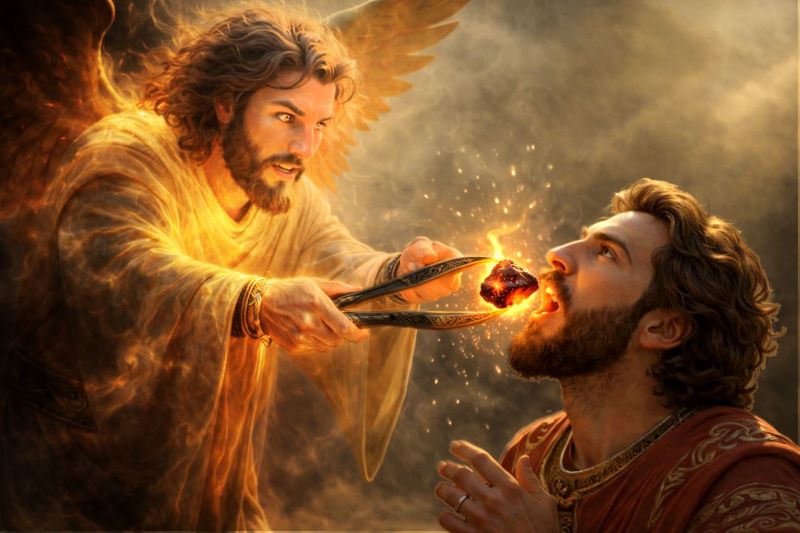
Notice the backdrop for the vision. The temple itself is filled with smoke. The whole earth is declared full of His glory. The holiness we encounter here is not a quality confined to some sacred inner chamber, it is expansive, overwhelming, pressing outward into every space, and Isaiah finds himself standing inside it with nowhere to go.
And Isaiah’s response is immediate and visceral: “Woe is me! For I am undone, because I am a man of unclean lips and I live among a people of unclean lips; for my eyes have seen the King, the Lord of hosts!” (Isaiah 6:5). Let’s take a moment to consider what Isaiah is saying here. In Hebrew thought, the lips are the outward expression of the heart; what comes out of the mouth reveals what lies within (Matthew 15:17-20). So, Isaiah is confessing that not only does he feel inadequate to address the people on God’s behalf but that he’s actually no better than anyone else. The encounter is forcing us to see the clear distinction that exists between qadosh and chol; the set apart and the ordinary. Isaiah doesn’t need to be told that he doesn’t belong there. He’s like a fish out of water.
But the vision doesn’t end there. One of the seraphim takes a burning coal from the altar and presses it to Isaiah’s lips. “Your iniquity is taken away, and your sin forgiven” (Isaiah 6:7). What is taking place here? Is the coal holy? Yes, most certainly. It’s taken from the brazen altar. From the very throne room of God. But this isn’t about the transfer of something sacred or mystical. Throughout the Hebrew scriptures, fire is presented as the great purifier. It burns away what is unclean. So, what happens to Isaiah is that his lips (and by implication, his heart) are cleansed from their impurity, setting him apart for God and separating him from the people.
And immediately following this, we see his commissioning: “Whom shall I send, and who will go for us?” Then Isaiah responds, from his newly given identity: “Here am I. Send me” (Isaiah 6:8). The service flows directly and necessarily from the separation and the filling that preceded it, and this is the crucial point. The purification was never an end in itself. It was always the necessary preparation for Isaiah to fully participate in God’s purposes.
One thing worth reiterating is that, although it is holy, the burning coal carries no moral quality by itself. It doesn’t choose to obey or strive to be set apart, and yet it is the instrument that God uses to achieve this purification. So, holiness is not moral perfection and neither is it something that accumulates through its contact with sacred objects or relics.
Similarly, Isaiah doesn’t try to climb towards or draw closer to God. We don’t witness his attempts to morally prepare himself or achieve readiness through his own efforts. He falls to his knees, and the seraph comes to him with the fiery coal. God selected Isaiah as the prophetic agent of His message and there in that place of brokenness and humility he experiences the cleansing, filling and commissioning for service. This is the direction in which holiness consistently flows in Scripture; not from human achievement upward, but from God’s initiative outward, to what He claims and designates for His purposes.








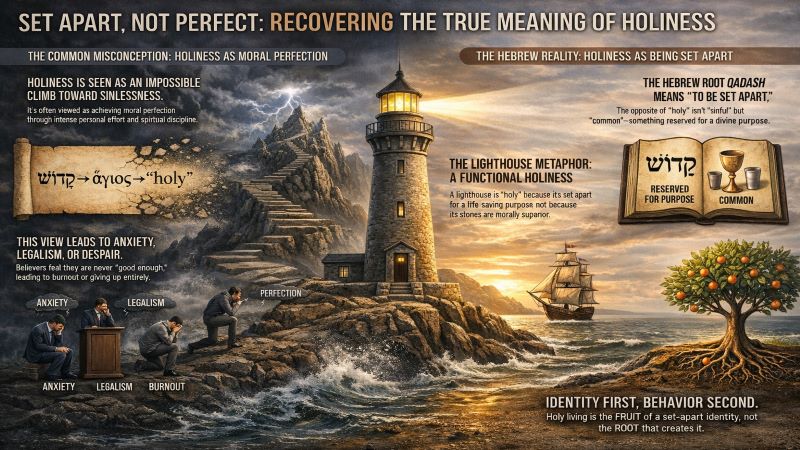
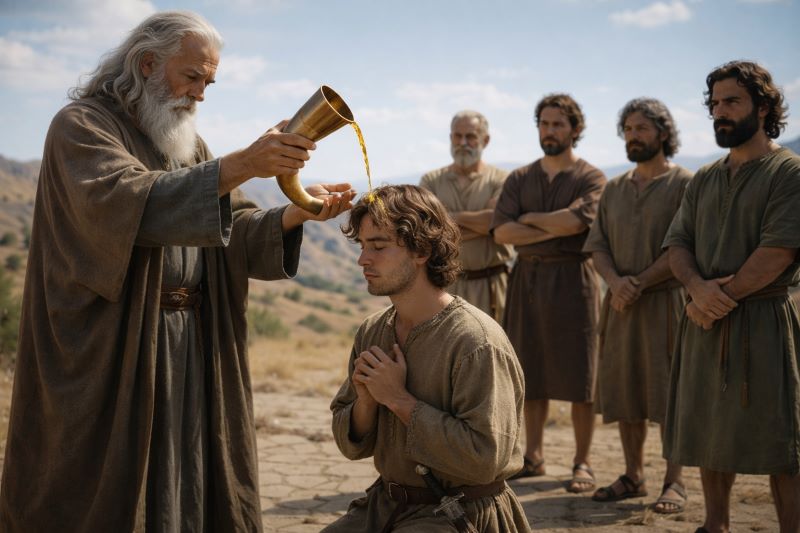
Having said all of that, let’s be absolutely clear about something: God does care deeply about how His people live. The moral dimension of holiness is real and important, and we shouldn’t minimise it. But it is the fruit of holiness, not the root of it. It flows from our identity, it doesn’t create it.
Leviticus 19 provides us with a perfect example of how this works. Right after declaring “You shall be holy, for I the Lord your God am holy” (v.2), God doesn’t hand Israel a list of spiritual exercises designed to help them achieve holiness. Instead, He gives them detailed instructions about how holy people should live: don’t harvest the corners of your fields, pay your workers promptly, don’t put stumbling blocks before the blind, use honest weights and measures, love your neighbour as yourself.
These aren’t conditions for becoming holy. They are descriptions of how holy people; people who belong to the Holy One, are actually supposed to conduct themselves. And the sequence matters enormously. You’re not holy because you do these things. You do these things because you’re holy, because you’ve been set apart to reflect the character of the God who claimed you.
Think of it this way: the lighthouse keepers didn’t maintain the light in order to become lighthouse keepers. They maintained the light because they already were lighthouse keepers. Their identity shaped their behaviour. Their calling determined their conduct. If they had stopped maintaining the light, they wouldn’t have ceased to be keepers, they would simply have become unfaithful keepers, keepers who had abandoned their post. Their identity flowed from their commission, not the other way around.
Peter understands this perfectly when he writes to scattered believers: “But you are a chosen race, a royal priesthood, a holy nation, a people for God’s own possession, that you may proclaim the excellence of him who called you out of darkness into his marvellous light” (1 Peter 2:9). Notice the sequence: you are these things; chosen, royal, priestly, holy. That’s their identity.
Why? So that you may live accordingly, proclaiming God’s excellence. Their purpose flows from it.
When Jesus says, “Therefore you shall be perfect, just as your Father in heaven is perfect” (Matthew 5:48), He’s not introducing a new and impossible standard of sinless perfection. He’s echoing the Levitical call to holiness; be complete, whole, consistent with your Father’s character. Live as His image-bearers. Let your lives display His nature. Not in order to earn acceptance, but because you have already been accepted, claimed, set apart, and filled for exactly this purpose.
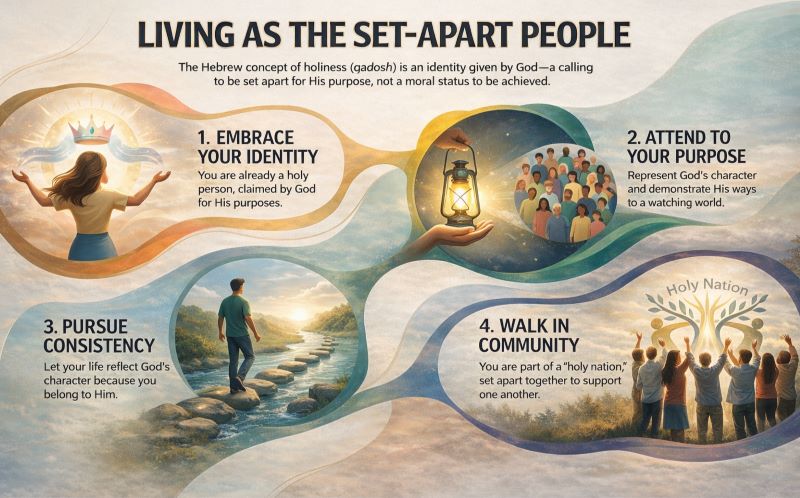
The loss of this Hebrew understanding of holiness has created a genuine pastoral crisis in much of Western Christianity. When holiness becomes primarily about moral performance, several devastating consequences follow, and we can see all of them playing out in the church today.
The first is perpetual anxiety. When holiness becomes primarily about moral performance, believers end up measuring themselves against a standard that always seems just out of reach; never quite holy enough, never quite there and condemned by their own failings. The second, closely related, is that this pressure tends to produce one of two responses: a crushing legalism that doubles down harder on rules in an attempt to manufacture what only God can declare, or a despairing antinomianism that gives up entirely, concluding that holiness is simply impossible and therefore irrelevant. The third consequence is that we lose sight of our true vocation, ceasing to see ourselves as God’s commissioned people and coming instead to see ourselves as moral projects in permanent need of improvement. And the fourth is that we completely miss the point of the moral commands themselves. What were always God’s instructions for how His image-bearers flourish together become arbitrary hoops to jump through, disconnected from the wisdom that they were always meant to convey.
When we recover the Hebrew framework, all four of these shift. The anxiety lifts, not because the standard is lowered, but because our identity no longer depends on our performance. We are already set apart, already claimed (1 Peter 2:9), already holy people learning to live consistently with who we are. The legalism and the despair both dissolve because the question changes. Instead of asking “am I holy enough?” we begin to think differently about a shared identity as a set-apart people.
We are to represent His character to a watching world. To embody His ways in our communities. To demonstrate what human flourishing looks like under His rule. To play our part as the light in the darkness and the salt that preserves and flavours everything around it (Matthew 5:13-16). And God’s commands stop being arbitrary rules and start being what they always were: the wisdom of the Creator about how His people thrive in relationship with Him and one another.
The burning coal from the altar doesn’t try to become hot. It simply is hot, because of where it has been and what it has been near. That same truth applies to us. Because we belong to the Holy One, because we carry His name, because we are marked as His possession, our lives should reflect His character, not from fear of losing His favour, but from love for the One who claimed us.
And when we fail; and we will all fail, we don’t lose our identity. A lighthouse keeper who falls asleep on watch doesn’t cease to be a keeper. He’s simply an untrustworthy keeper who needs to wake up and return to his post. Our calling remains. God’s claim on us stands firm. We confess, we repent, we return to our purpose (1 John 1:9). The coal that falls from the altar can be placed back in the fire.
The shift isn’t from one theological system to another. It’s a change in the very soil of our identity. It moves us from the anxious, isolated striving of the individual; forever condemned by failure, to the grateful, corporate calling of a people. Our focus turns outward, from self-improvement to the divine mission.