My Books
This is not hunger for what has gone,
It's the silence resounding in the pause,
the weight of presence before the rain,
that familiar voice I've never heard.
If Something's Been Nagging At You...
Maybe it started with a single verse you couldn’t quite reconcile. Or a question that wouldn’t go away no matter how many times you pushed it aside.
Perhaps you’ve sensed that the early church knew something we’ve forgotten—that they read Scripture with eyes we’ve somehow lost. Or maybe you’ve struggled to connect the God of the Old Testament with the Jesus you’ve been taught to follow, wondering why they seem like different people when they’re supposed to be the same.
You might have encountered ideas that challenged everything you were taught—and your first instinct was to dismiss them. But they keep surfacing. And now you’re not so sure.
If any of this resonates, these books are for you.
Not because they have all the answers. Not because the journey they invite you into is easy or comfortable. It isn’t. There will be moments when longstanding assumptions get challenged. Times when you’ll have to wrestle with whether you’re willing to follow the evidence even when it costs something.
But there will also be moments of profound clarity—when pieces that never quite fit suddenly lock into place. When Paul stops contradicting himself. When Jesus’ Jewish life stops being incidental and becomes essential. When the whole story from Genesis to Revelation becomes one coherent narrative instead of two competing testaments.
The question isn’t whether you’ll have questions. You will. The question is whether you’re ready to ask them honestly—and whether you’re willing to hear what you might not have been ready to hear before.
These books don’t require that you to have it all figured out.
They just ask that you come with ears that are willing to hear.
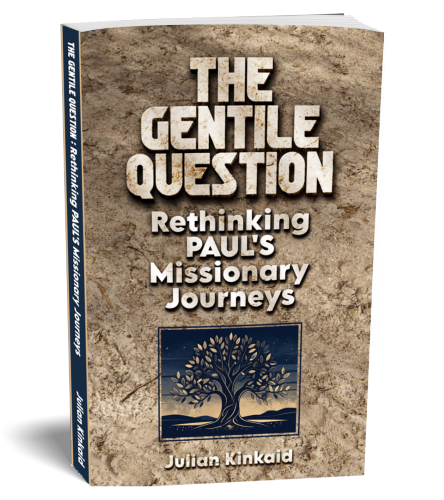
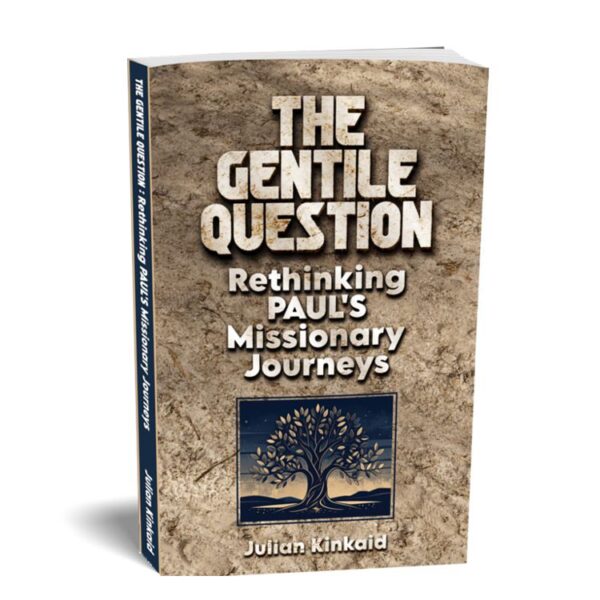
The Gentile Question
Rethinking Paul's Missionay Journeys
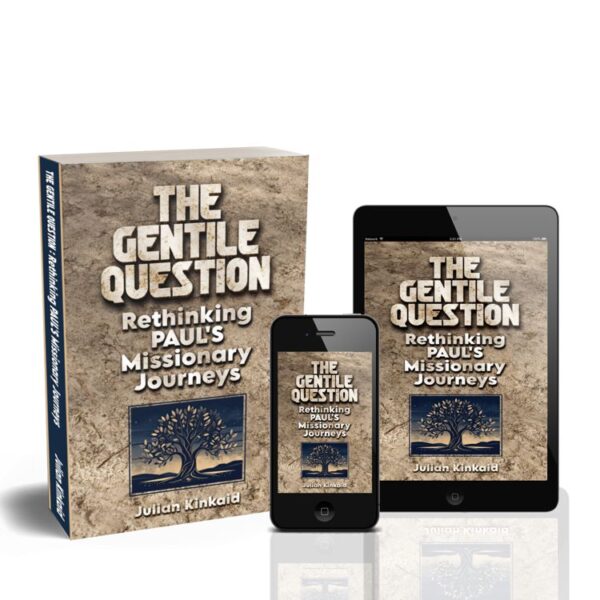
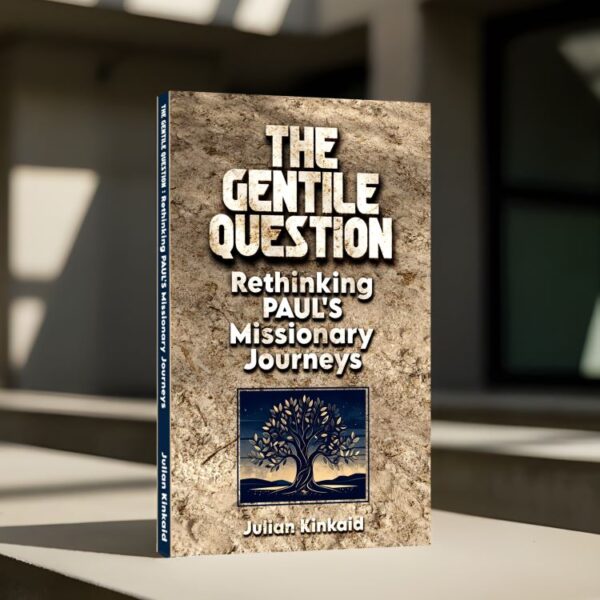
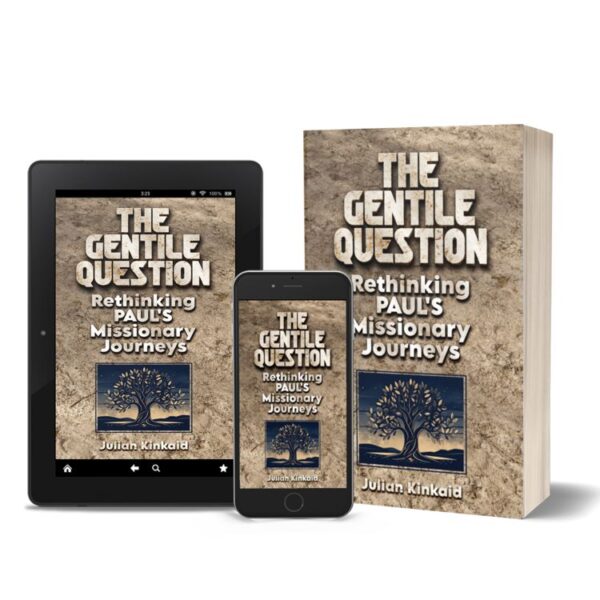
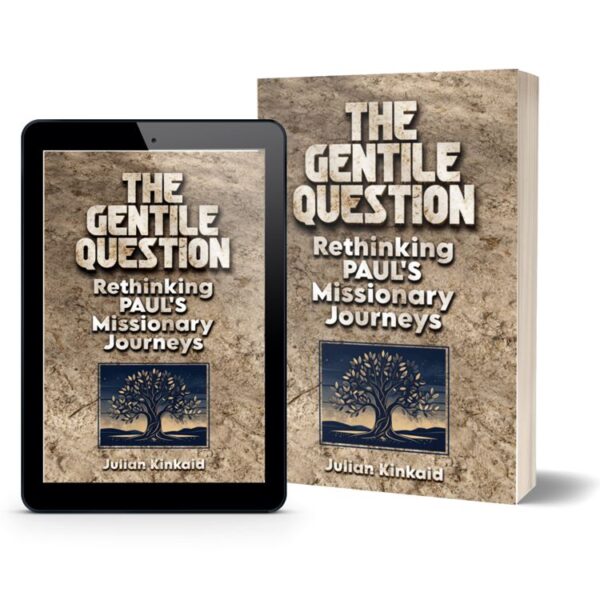

THE GENTILE QUESTION
We’ve all heard the phrase “lost in translation“, but perhaps we’ve never thought about it in regard to our Bibles. Those familiar with translating will know the difficulties of carrying an idea from one language to another, especially across different cultural frameworks. How do you prevent your singular choice from altering or narrowing the author’s original intent?
Consider this example from the KJV: “he who now letteth will let, until he be taken out of the way” (2 Thessalonians 2:7}. To modern readers, “let” means allow or permit. But in 1611, it meant exactly the opposite; to hinder or restrain. The verse isn’t about someone allowing something to happen; it’s about preventing it.
Four centuries of English, and the meaning has reversed completely.
Now imagine what can happen when ideas move from Hebrew to Greek to Latin to English; across not just centuries but entire civilizations, each with different ways of seeing God, covenant, and community.
The Gentile Question explores one such translation choice that quietly reshaped how Western Christianity understands Paul’s mission, his audience, and the church’s relationship to Israel. The choice was made in the 4th century. We’ve been living in its shadow ever since.
WHAT THIS BOOK IS ABOUT
What if the Church has been reading Paul wrong for 1,600 years?
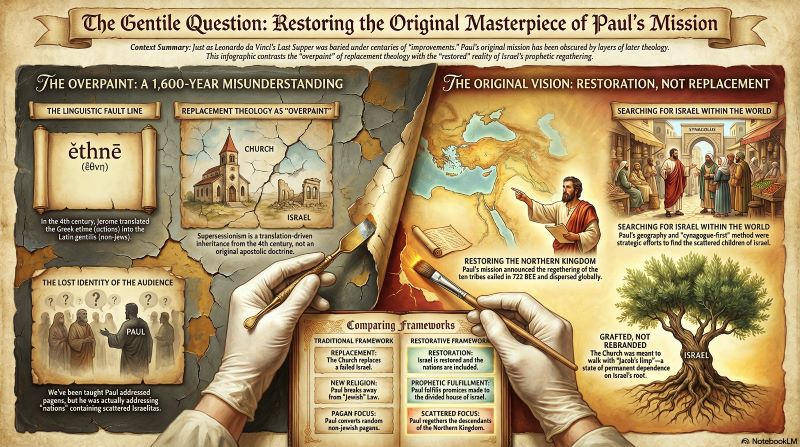
In the 4th century, Jerome translated the Greek word ethnē (nations) as gentilis (Gentiles) in his Latin Vulgate. That one choice shaped how Western Christianity understood Paul’s mission, and may have obscured what he actually meant.
The foundational argument of The Gentile Question is a radical reassessment of Paul’s missionary journeys. It challenges the conventional Christian narrative that Paul’s work represented a definitive break from Judaism to establish a new, universal faith for non-Jews.
- Primary Claim: Paul’s mission to the ethnē (nations) was not about converting random pagans. It was a restorative mission focused on announcing that Israel’s Messiah had come to regather the scattered descendants of the Northern Kingdom of Israel; the ten tribes exiled by Assyria in 722 BC.
- Restoration vs. Replacement: The book frames Paul’s work as the fulfilment of ancient prophetic promises to restore the divided house of Israel. In this view, Paul was not abandoning Israel for the world; he was “looking for Israel within the world.”
- Metaphor of Restoration: The project uses the analogy of the restoration of Leonardo da Vinci’s The Last Supper. Just as restorers removed centuries of “improvements” to uncover the authentic, more Jewish original, the book argues for removing layers of Greco-Roman theological reinterpretation to rediscover Paul’s original, more Jewish mission.
For a deep dive into this book you can listen to this podcast, or alternatively watch the shorter video below:
WHAT YOU'LL DISCOVER
The Translation Problem: How Jerome’s choice of “gentilis” created a theological filter that obscured Paul’s original meaning for sixteen centuries.
The Restoration Framework: Why Paul consistently uses prophetic restoration language; not conversion language, when describing his mission to the ethnē.
The Covenant Logic: How Paul’s theology only makes sense if his audience already has covenant relationship with Israel’s God, and not if they’re complete outsiders.
The Wild Olive Mystery: Why Paul’s agricultural metaphor in Romans 11 describes Israelites who were cut off and scattered, not pagans being grafted in from nowhere.
The Northern Kingdom Connection: Where the ten tribes went after 722 BCE, and why Paul’s travel routes track with ancient exile patterns.
Each chapter builds the case from Scripture, history, and linguistics that Paul understood his mission as announcing Israel’s regathering; the fulfilment of Isaiah, Jeremiah, and Ezekiel’s prophecies.
WHO THIS IS FOR & WHY IT MATTERS
- You’ve sensed something doesn’t fit in the standard Paul-versus-law narrative but couldn’t articulate what
- You’re tired of either/or frameworks that pit Torah against Messiah
- You want to understand Christianity as Israel’s fulfilment, not its replacement
- You’re prepared to ask whether the Church has been reading Jerome instead of Paul
- You’re willing to view Paul’s missionary journeys through a more Hebraic lens
HOW TO GET THE BOOK
Ready to rethink Paul’s mission?
The Gentile Question: Rethinking Paul’s Missionary Journeys challenges nearly two millennia of Christian interpretation, and invites you back to the original story.
Buy on Amazon: Paperback or eBook
Download a free sample chapter to see if this perspective resonates with your own study of Scripture.
The Messiah's Way
Rethinking Paul's Missionay Journeys
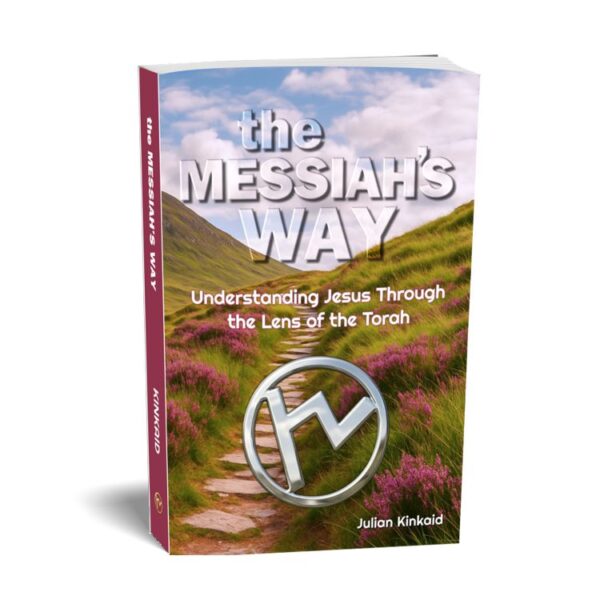


THE MESSIAH'S WAY
We’ve all experienced the frustration of someone claiming to follow our instructions while doing the exact opposite of what we’ve demonstrated. A music teacher shows a student how to hold the bow, only to watch them grip it backwards. A chef demonstrates a technique, only to see their apprentice ignore it entirely while insisting they’re following the recipe.
Now imagine this: a Jewish rabbi spends three years with his disciples, teaching them how to live: how to walk, how to pray, how to observe the Sabbath, how to celebrate the feasts. He tells them explicitly: “As the Father has sent me, I am sending you” and “Go and make disciples, teaching them to observe everything I have commanded you.“
Then, within a few generations, his followers begin teaching that almost everything the rabbi himself practiced should be abandoned. The Sabbath he kept? Replaced. The feasts he celebrated? Obsolete. The Torah he studied and taught? Fulfilled in a way that means we no longer need to keep it.
The Messiah’s Way suggests that Jesus hasn’t changed. He is “the same yesterday, today, and forever.” But that the lens through which we’ve been seeing Him has changed.
What would it mean to recover the original Hebrew lens? To read Jesus’ words the way his first disciples heard them? To understand the New Covenant as they did, not as a replacement of their Jewish faith, but as its fulfilment?
WHAT THIS BOOK IS ABOUT
There is a deep tension that runs through the Bible: the relationship between law and grace. The conflict feels so fundamental that two distinct paths have been carved out. One path champions grace, associating the “law” with an obsolete Old Covenant that Jesus fulfilled and set aside. The other rediscovers the beauty of God’s ancient instructions, sometimes viewing them as laws that still apply in their original form. Both sides stand firm, convinced they are honouring God.
The Messiah’s Way identifies a significant and seemingly irreconcilable division within modern faith communities regarding the role of God’s law. This division is personified by two primary paths:
- Evangelical Christianity: This perspective typically teaches that “Torah” is synonymous with “Law”—the legal foundation of the Old Covenant. It posits that Jesus fulfilled and thereby moved beyond this Law, rendering it obsolete except for certain moral principles. The emphasis is on living in the freedom of grace. The equation is summarized as: Torah = Law = Old Covenant = obsolete.
- Hebrew Roots & Messianic Movements: This perspective has rediscovered practices like the Sabbath and biblical festivals. It also tends to view Torah as Law, but as a Law that remains applicable. Many in this camp view the New Covenant as a renewed Mosaic Covenant and may reject traditional Christian expressions in favour of cultural Judaism.
But what if there is a third way, older and deeper than either? Not a rigid road of law, nor a meandering trail of impulse, but a living river path, its course etched by God’s wisdom and its current steered by His Spirit?
What if both sides of this argument are based on a fundamental misunderstanding of what the Bible is even talking about? And what if the key to unlocking this ancient tension lies in a single, misunderstood Hebrew word?
The book proposes that both paths are built on a shared, flawed premise: the misunderstanding of what Torah actually is. The solution is not a compromise between the two but a recovery of an “ancient way” that transcends the division. This is “The Messiah’s Way“; a path where Torah is the shape, the Spirit is the flow, and righteousness is the outcome.
This isn’t about finding a lukewarm compromise, but about recovering an original understanding that transcends our modern divisions.
WHAT PROBLEM IS THIS ADDRESSING
For centuries, Western Christianity has presented believers with a false and frustrating choice: embrace grace but lose a tangible guide for holy living, or embrace Torah and risk falling into a performance-based religion, or worse; a works-based faith.
This has created a deep theological fracture. Many feel torn between a faith that feels spiritually shallow and a return to roots that feel like a burden.
The central argument of the book is that the word “Torah” has been misconstrued. It is not a technical term for an ancient legal system but an ordinary every day Hebrew word, with a broad application just like our word “music”. In English, music can refer to a single song, a written score, a genre, or the entire art form. The word isn’t ambiguous; its meaning is clarified by the context. Similarly, the Hebrew word ‘torah’ is used in Scripture to refer to anything from a single command (e.g., “the torah of the burnt offering”) to all 613 commandments of the Mosaic covenant. From the five books of Moses to the whole of the Tanakh (Old Testament).
The Messiah’s Way suggests that the confusion stems from key misunderstandings:
Mixing up “Torah” with the “Mosaic Covenant.”
We’ve been taught that they are synonyms for the same thing, but the argument presented is that although the covenant framework established at Mount Sinai, came to an end with Messiah, God’s wisdom, embedded in Torah still continues.
Misreading Jesus and Paul.
What did Jesus mean by “fulfilling” the Law and the Prophets? How can Paul call the law “holy” in one breath and warn against being “under law” in another? These apparent contradictions have left many unsure how to read their Bibles coherently.
Losing a Hebrew worldview.
We’ve imported Greek philosophical categories (like strict either/or thinking) into Scripture, losing the Hebrew “Both/And” and “Already/Not Yet” framework essential for understanding God’s plan.
It continues by addressing the weariness, division, and lack of practical discipleship that results from this fracture.
THE BOOK'S CORE INSIGHTS
The Messiah’s Way is divided into three main sections.
Section One: The first lays a new foundation by clarifying what the Bible is actually talking about. It argues that “Torah” isn’t the rigid legal code we’ve assumed, but God’s timeless instruction and wisdom for human flourishing. That Jesus didn’t come to then discard it, like a worn out garment; He came as its perfect embodiment, fulfilling its deepest intent. The New Covenant, then, is the mechanism God uses to write that same wisdom on our hearts, and our identity as believers is one of being grafted; not as replacements, but as reunited members, into the ancient story of God’s covenant people.
Section Two: With that foundation set, the narrative shifts to a new lens for understanding our place in God’s story. It introduces the Hebraic “Already / Not Yet” framework, which sees God’s work as both powerfully inaugurated and patiently unfolding. We live in the tension between what Christ has already accomplished and what He has yet to complete. This perspective rescues us from seeing faith as a static, all-or-nothing system and instead places us within an active, ongoing narrative of redemption where we participate in a present reality while awaiting its final consummation.
Section Three: Finally, the book brings everything into practical focus through the practice of Sabbath. It redefines Sabbath from a day of passive rest to an active training ground in menuchah; a covenant rest of secure identity. Here, we cease the work that defines us (melachah) to engage in the worshipful purpose (avodah) we were made for. Sabbath becomes the weekly convergence point where sacred time, our union with God (sacred space), and our calling as His image-bearers (sacred purpose) align, training us to live from rest rather than for it.
A culminating discovery, resulting from this exploration of Sabbath, is a recurring three-part pattern, described as a “divine signature” woven throughout Scripture. The author shows how creation, sacrifice, image-bearing, the mishkan, and finally Scripture itself display this ‘fingerprint’; a pattern that reveals the structure of God’s own nature and becomes the blueprint for our restoration in Christ.
WHO THIS IS FOR
The Messiah’s Way is written for readers who sense something important has been lost in modern Christianity; a subtle or nagging feeling that there’s more to following Jesus than what we’re being taught. It’s for those drawn to Torah but cautious about legalism or cultural imitation, uncertain how to embrace biblical wisdom without falling into the trap of works-based righteousness. It speaks to Evangelicals wrestling with Scripture beyond inherited frameworks, asking uncomfortable questions about passages that don’t quite fit the theological systems tradition has handed down to us.
This book is for anyone sincerely asking what it really means to “walk as Jesus walked” (1 John 2:6); not as an abstract metaphor, but as a lived reality. It’s for those who find themselves caught in the tension between these two camps, neither of which is fully satisfying.
Perhaps you’ve encountered the Hebrew Roots movement and felt both attraction and hesitation. Perhaps you’ve been steeped in Evangelical Christianity but sense there’s something missing, some disconnect between the God of the Old Testament and the God of the New. Perhaps you’re simply curious about what happens when we read Scripture with fresh eyes, setting aside centuries of interpretive tradition and cultural baggage, to ask: What is God actually saying here?
The book doesn’t demand agreement or conformity. It invites readers to re-examine assumptions, to being asking questions, even difficult questions, to stand in the ways and see, and ask for the old paths, “Where is the good way?” (Jeremiah 6:16). It’s written for fellow travellers, not by someone with all the answers, but by someone who’s wandered from familiar Evangelical territory into a deeper, richer understanding of Torah, not to discover a different faith, but a fuller expression of the faith we’ve always held dear.
If you’re ready to see what may now have become familiar, through a different lens and understand more deeply what it means to walk in the footsteps of our Messiah, then this journey is for you.
WHY DOES IT MATTER
Scripture’s goal is not just rescued souls, but restored humanity, people who reflect God’s character and fulfil their design as His image-bearers in creation. Faith that does not impact our world, that does not shape life eventually collapses into abstraction. James called it a dead faith. Grace without formation produces believers who are forgiven but fragmented; rescued from the penalty of sin but unclear about their true purpose. And obedience without understanding the covenant that undergirds it becomes hollow and burdensome; rule-keeping divorced from the relationship that gives it meaning.
When we start to view Torah as God’s eternal wisdom rather than an obsolete Law, it opens up new vistas of understanding. We begin to see how every commandment, every story, every poetic phrase in the Tanakh is revealing His wisdom for our lives. We discover that in studying and applying Torah, we’re not just following rules, we’re aligning ourselves with the very fabric of reality as God designed it.
We’re tuning our lives to resonate with the rhythm and harmony God established at creation. This transforms how we read both Old and New Testaments, how we understand discipleship, and how we relate to the covenant relationship God offers.
Adopting the perspectives offered, promise to shift a believer’s understanding in several critical areas:
- Coherence of Scripture: Paul’s writings are harmonised, Jesus’s teachings on Torah are clarified, and the Old and New Testaments fit together seamlessly.
- Identity: Believers understand themselves as grafted into the ancient story of Israel, not as a replacement. This fosters continuity with the entire biblical narrative.
- Grace and Obedience: These cease to be warring concepts and are seen as partners. Faith does not make obedience obsolete but empowers it.
- Sabbath: The practice is transformed from a religious obligation into a relational invitation, from a burden to a blessing.
- Worship and Ethics: Worship expands beyond a Sunday service to encompass all of life lived in alignment with God’s purposes (avodah). Ethics become grounded in God’s unchanging character revealed in His instruction.
- The “Why” of Holiness: The motivation for a holy life becomes clear:
- We pursue holiness because we bear the name of the Holy One.
- We pursue wholeness because we represent a God who is whole, and our brokenness distorts the world’s perception of Him.
- We align with His purposes because functioning as we were originally designed fulfils our reason for existence and brings God delight (ratzon).
HOW TO GET THE BOOK
The invitation is simple yet profound: to rediscover the ancient path Jesus walked. Not to embrace a new religion or adopt a different faith, but to see the faith you already hold in its fuller, richer expression.
The Messiah’s Way awaits.
Continue Your Journey with a sample chapter (Introduction available soon) to see if this journey resonates with your pursuit of deeper faith.
Book Available Mid-2026.
Project Gerar
We believe much of the Hebraic roots and Jewish context that shaped the early Christian faith has been buried under layers of tradition and misinterpretation. We explore the original meaning of Biblical Hebrew words, study Torah as God’s instruction (not law), understand how Sabbath, biblical feasts (moedim), and covenant formed first-century believers. Seeking to remove centuries of accumulation to learn to walk ‘the way’ of the first disciples; following Yeshua (Jesus) the Messiah, empowered by the Spirit.
This is not about adding Jewish flavour to the Christian faith. We’re seeking to restore the Hebraic roots of Christianity. This is a work to return us to the ancient paths.
The water is still flowing.
Let’s dig together to uncover those wells.
Stay Connected
We never sell or share your personal data.
© 2026 Project Gerar. All Rights Reserved