Charles Blondin - Niagara Falls

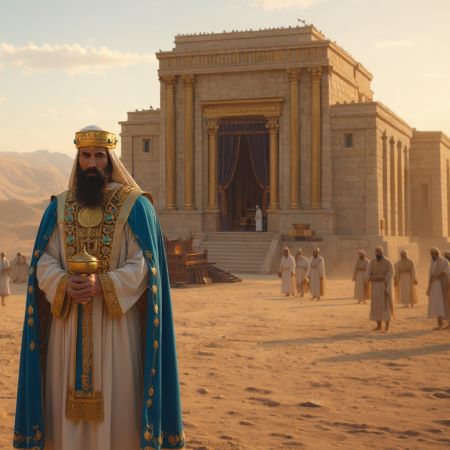
The Faithful One

The Faithful One

The Faithful One

The Faithful One

Beyond Belief: The Heart of Faith

‘I just don’t have enough faith.’

How many times have you heard someone say this or even thought it yourself? Perhaps you’ve prayed for healing or asked for guidance that didn’t come, or wrestled with doubts about doctrines you’re supposed to believe without question. And in those moments, the whisper comes: If only I had more faith.

We’re told that faith can move mountains, that without faith it’s impossible to please God, that we’re saved by faith. Yet for many believers, faith feels perpetually insufficient; a fragile commodity that must be manufactured through sheer force of will, constantly measured and found wanting. We imagine faith as a substance we must somehow produce in greater quantities, believing harder, pushing away doubts, mustering conviction we don’t truly feel.
But what if this entire struggle is built on a misunderstanding?

What if the very word we translate as ‘faith’ never meant what we think it means?

Niagara Falls, 1859

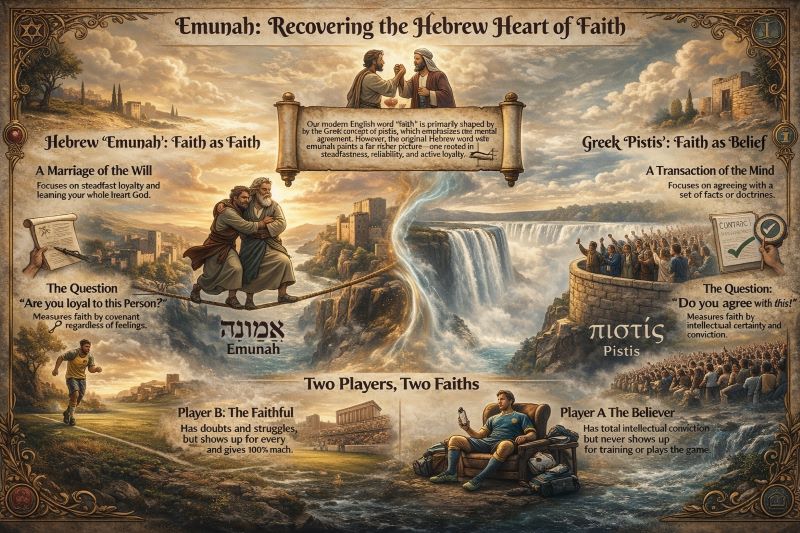
In the summer of 1859, the great tightrope walker Charles Blondin announced he would cross Niagara Falls on a tightrope. When the day came, 10,000 people gathered on the Canadian side to watch this impossible feat.

Blondin walked across the churning waters below, balancing himself on a rope stretched 1,100 feet across the gorge, 160 feet above the falls. The crowd held their breath. When he reached the Canadian side safely, 10,000 people erupted in applause, shouting his name.

‘Blondin! Blondin! Blondin!’ they yelled.

He quieted the crowd, and with an air of showmanship, he asked: ‘Do you believe in me?’

The crowd roared back: ‘We believe! We believe! We believe!’

He silenced them again. ‘Do you believe that I can go back across this tightrope carrying someone on my shoulders?’

Again, the crowd shouted: ‘We believe! We believe! We believe!’

Blondin looked out at the 10,000 faces and asked the formidable yet revealing question:
‘Which of you will be that man?’

…Silence!

The difference between shouting ‘We believe!’ from the safety of solid ground and actually climbing onto the shoulders of a man about to walk across a tightrope above Niagara Falls is immense. And this is precisely the difference we need to understand if we are going to recover the Scriptural meaning of faith.

The Hebrew Foundation: Steadfastness, Not Mental Agreement

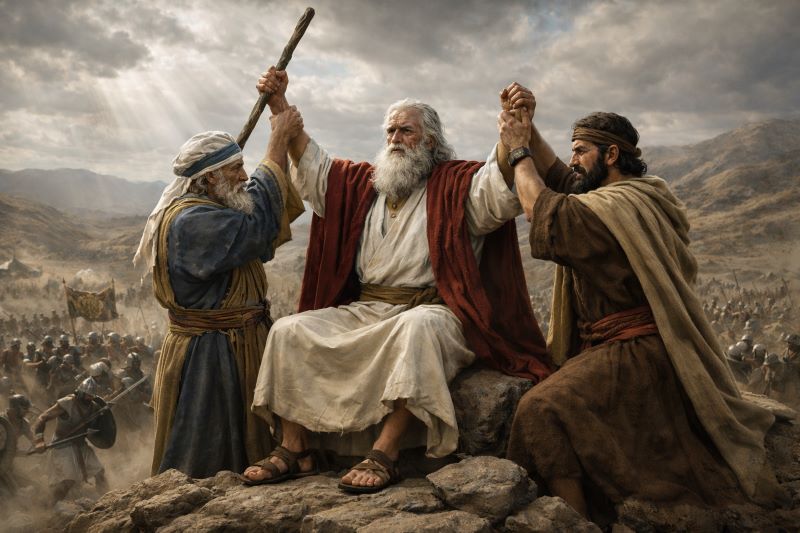
Moses, Aaron and Hur - Emunah

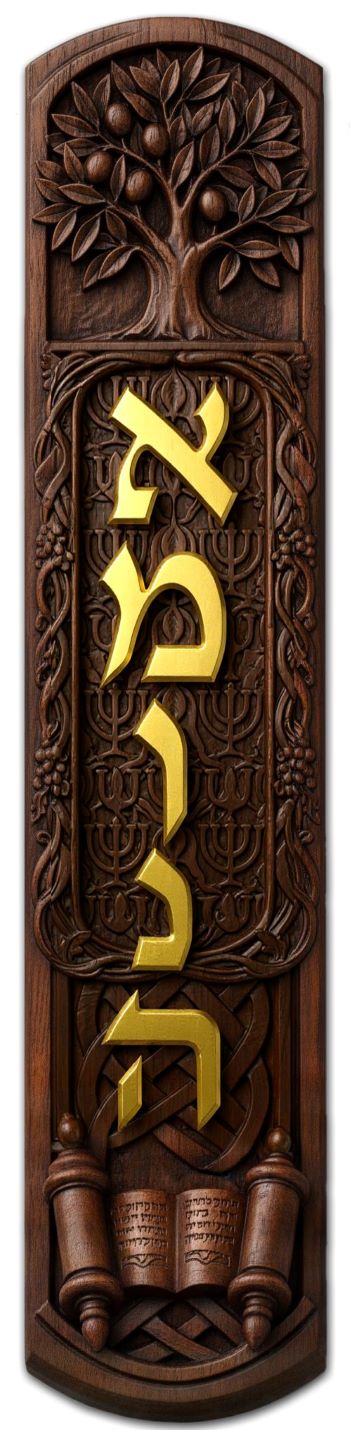
The Hebrew word for faith is אֱמוּנָה (emunah), derived from the root אָמַן (aman), which means to be firm, established, steady, or trustworthy. This etymology reveals something significant: the Hebrew concept of faith is not about the strength of your beliefs, but about how steadfast your trust is.

When God is described as faithful, the word is emunah. God isn’t ‘believing harder’, this speaks of God’s character. He is unshakably reliable, steadfast and utterly dependable. When Moses’ hands were held steady during the battle with Amalek, the text says his hands remained emunah; firm, unwavering, supported by Aaron and Hur. This is the same word, the same concept.

Emunah isn’t about the measure or quantity of your belief; it’s about the quality of your response to God’s trustworthiness. It’s not about mustering the mental conviction that God can or will do something; it’s about demonstrating covenant loyalty, reliant on His faithfulness.

We find this concept embedded in a word we use all the time, at the end of a prayer: Amen. When we say ‘Amen,’ we are using this same Hebrew root. But it’s become a religious punctuation mark, a passive ‘I agree’. In its original context, ‘amen’ was an active pledge. It meant: ‘This is firm, reliable, and trustworthy. Therefore, I will now organise my life and actions around the truth of this statement, relying on God’s faithfulness to make it a reality’.

But ancient Hebrews understood faith as faithfulness; the covenant commitment to remain loyal, to trust God’s character regardless of the circumstances. It is the confidence to lean one’s full weight upon Him in the certain knowledge that He will support you; like a football player who consistently shows up for training despite doubting their ability or run of poor performance, or like a spouse who remains faithful to their partner through the ups and downs of their marriage.

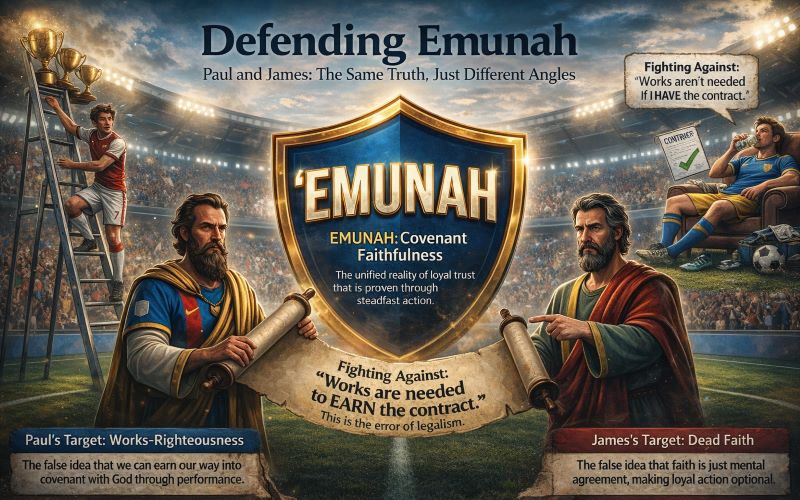
The Two Footballers: Making the Abstract ‘Concrete’

Imagine two players being signed by Manchester United on the same day. Both put on the famous red shirt for the press photos. Both sign their contracts. And both are now, officially, Manchester United players.

But here’s where their stories diverge dramatically.

Player A: The Believer:

Player A holds up the jersey with total conviction. He signs the contract with certainty. He genuinely, intellectually believes he is now a Manchester United player. He’s learnt the club’s history and studied their tactics flawlessly. He has extreme confidence in the team and their manager, Rúben Amorim and is certain that this season Man. United will win the Premier League.
But he never goes to training. He doesn’t run drills, doesn’t show up for practice sessions and isn’t there to hear the manager’s instructions. When match day comes, he’s cheering from the stands, still confident in his team, but not actually playing.

Player B: The Faithful:

Player B was a surprise signing. He has moments of self-doubt, wondering if he’s good enough for the famous red shirt. He’s still learning the formations and makes mistakes in practice. He doesn’t feel like a superstar every day. Some mornings he wakes up questioning whether he really belongs.
But he shows up for every training session, rain or shine. He listens to the coach. He sweats on the pitch. He gives 100% in every match, even when they’re losing. He’s learning, growing, struggling, but he’s there, doing the work, showing his commitment to the team.

Which player is truly a Manchester United player?

Player B.

Player A has a contractual agreement and perfect unwavering conviction, but no one would consider him a true part of the team. His ‘belief’ is irrelevant because he isn’t faithful to the daily reality of being a player.

This is the difference between the Greek pistis and the Hebrew emunah.

The contract signing is just the start. But it’s only the beginning of the relationship, not the entirety of it.

Player A is like a fan, shouting ‘I believe we can win!’ from the safety of the stands. Player B is someone committed to winning, prepared to defend, tackle and even score the winning goal; trusting enough to participate and dedicated enough to risk and to follow through.

The two footballers

The Marriage Covenant: Israel and Yahweh

To understand emunah even more deeply, we need to explore how Scripture itself describes the relationship between God and His people: as a marriage covenant.

God Initiates the Covenant

Moses reminds Israel:
Yahweh didn’t set his love on you nor choose you because you were more in number than any people; for you were the fewest of all peoples; but because Yahweh loves you, and because he desires to keep the oath which he swore to your fathers.’ (Deuteronomy 7:7-8)
Israel didn’t earn their covenant. God chose them—pure grace. They were slaves in Egypt with absolutely no bargaining power. God’s choice was pure, unmerited grace, like a proposal made entirely from love.

Israel Enters Through Emunah

At Sinai Israel didn’t respond with a simple statement of belief, but with a vow of action:
All the words which Yahweh has spoken will we do…All that Yahweh has spoken will we do, and be obedient.’ (Exodus 24:3, 7)
‘We will do.’ ‘We will be obedient.’ This is emunah; a commitment to steadfast covenant faithfulness. They’re saying, ‘We commit ourselves to this covenant relationship. We will be faithful…to do all that You ask of us.’

The Marriage Imagery Made Explicit

The prophets consistently describe this relationship as marriage:
I will betroth you to me for ever. Yes, I will betroth you to me in righteousness, in justice, in loving kindness, and in compassion. I will even betroth you to me in faithfulness [emunah]. You shall know Yahweh.’ (Hosea 2:19-20)

The Critical Distinction

Could Israel ‘earn’ marriage to God by keeping Torah beforehand?
No. They were slaves. God chose them freely.

Once married, was Torah obedience optional?
Absolutely not. That’s what covenant faithfulness means.

If Israel committed adultery (idolatry), did that mean they’d never been married? No, the prophets describe it as covenant breaking, not covenant never-existing.

The works don’t earn the covenant. The works express the covenant.

The James Solution: The Misunderstood Epistle

Emunah - Paul and James

This is where recovering the Hebrew understanding becomes absolutely crucial. The Epistle of James has confused Christians for nearly 2,000 years, but it’s only confusing if you’re reading it through a Greek abstract lens.

The Setting

James writes to Jewish believers scattered throughout the Greco-Roman world. He sees a dangerous shift: the Hebrew concept of emunah is being replaced by the Greek concept of pistis as intellectual belief. Faith is becoming an abstract mental state divorced from behavioural reality.

A Note on Doubt and Divided Loyalty

James briefly addresses doubt in 1:6-8, describing the doubter as ‘double-minded’ (dipsychos) and ‘unstable in all his ways.’ This concept of divided loyalty; of trying to serve two masters simultaneously, is crucial to understanding biblical faith.

However, the relationship between doubt, divided loyalty, and unbelief deserves its own thorough exploration. We’ll examine this more fully in a separate article. For now, what matters is recognising that James is defending faithfulness as demonstrated loyalty, not belief as mental certainty.

Doers, Not Just Hearers

But be doers of the word, and not only hearers, deluding your own selves.’ (James 1:22)

Greek framework allows: ‘I can know the truth intellectually without being a doer. I have faith in my head; what I do with my body is a different matter.’
Hebrew framework insists: ‘If you’re not doing it, you don’t actually have emunah. You’re just deceiving yourself.’

Player A is the ‘hearer only’: knows all the tactics.
Player B is the ‘doer’: learning through practice, training, playing.

Faith and Works: The Famous Confrontation

What good is it, my brothers, if a man says he has faith, but has no works? Can faith save him?…Even so faith, if it has no works, is dead in itself…You believe that God is one. You do well. The demons also believe—and shudder.’ (James 2:14-19)

James says: what you’re calling ‘faith’ is just verbal agreement. That’s not emunah at all.

Demons believe in God’s existence, power, and truth. They have perfect intellectual conviction, they even shudder at the reality. But demons don’t have emunah. They’re not faithful, loyal, or in covenant relationship with God.
Player A is like the demons, he believes all the right things about Manchester United but he’s not on the team because he never shows up.

Abraham’s faith wasn’t intellectually agreeing that God’s promise was true. His faith was signing the contract AND showing up for training; leaving his homeland, living as a nomad, offering Isaac. His emunah was visible in his actions, not hidden in his thoughts.

James and Paul Reconciled

Paul: ‘You don’t earn covenant entrance through Torah observance. You enter through emunah; trusting what God has done in Christ and committing to covenant faithfulness.’
James: ‘If you claim to have emunah but there’s no covenant faithfulness visible in your life, you’re lying to yourself. That’s not emunah; that’s just intellectual agreement.’

Both are defending the same Hebrew concept: – Paul fights those who think works earn the covenant (legalism) – James fights those who think faith can exist without works (dead orthodoxy)


Emunah in the New Testament

Hebrews 11:1 — The Nature of Faith

Now faith is assurance of things hoped for, proof of things not seen.’ (Hebrews 11:1)
This verse is often understood as defining faith primarily in terms of believing in the invisible or future; having confidence about things you can’t verify. But when we understand pistis here as faithfulness (the Greek word that translates Hebrew emunah), the meaning shifts dramatically.

The Greek word ὑπόστασις (hypostasis), translated as ‘assurance’, doesn’t merely mean mental confidence. In legal and practical Greek usage, it meant a title deed, a foundation, something that gives concrete reality to a promise. The word ἔλεγχος (elegchos), translated as ‘proof’, means demonstrable evidence, conviction, a convincing argument.

Through the lens of emunah, the verse means:
Faithfulness is the concrete foundation that gives substance to what we hope for. It’s the demonstrated conviction; the living proof, of the unseen spiritual realities. In other words: our loyal, persistent trust in God’s promise acts as the title deed, that makes future hopes a present reality in how we live.

Our faithful actions are the evidence that we are convinced of what we cannot yet see.

This isn’t about believing harder in the invisible. It’s about living NOW as if God’s promises are already true, because you’re leaning your full weight on the proven character of the Faithful One.
Consider the heroes who follow in Hebrews 11. They didn’t just believe God would act; they acted themselves based on trust in God’s promises, often long before those promises were visibly fulfilled:

Noah built an ark on dry ground, not because he had meteorological certainty about an upcoming flood, but because he trusted God’s character enough to stake everything on His word. He spent decades building whilst his neighbours mocked him. His faithfulness gave substance to the promised deliverance that hadn’t yet arrived. That’s emunah.

Abraham left his homeland for a destination unknown. He didn’t have a roadmap. He didn’t have certainty about how things would work out. But his faithfulness—his willingness to go—was the title deed to the inheritance he hadn’t yet received. His actions gave concrete reality to God’s promise.

Moses chose to be mistreated with God’s people rather than enjoy Egypt’s fleeting pleasures. His faithfulness to the covenant people, even in suffering, was the proof of his conviction about God’s future redemption.

They didn’t have perfect intellectual certainty. They had God’s proven trustworthiness to lean on—and their faithful response to that trustworthiness became the substance, the foundation, the title deed of what God had promised.

Ephesians and Faith

For by grace you have been saved through faith, and that not of yourselves; it is the gift of God, not of works, that no one would boast. For we are his workmanship, created in Christ Jesus for good works, which God prepared before that we would walk in them.’ (Ephesians 2:8-10)

Verses 8-9: Covenant Entry

You don’t earn your way into covenant. God initiates—pure grace. You enter through emunah, trusting what God has done in Christ.

Verse 10: Covenant Living

Once you’re in covenant, faithfulness is what covenant IS. You’re not saved BY your faithfulness; that would be works-righteousness. But you’re saved INTO a life of faithfulness, because that’s what being married means.

The works don’t earn salvation. The works demonstrate that salvation has genuinely occurred.

את

PROJECT GERAR

FIELD REPORTS

PG Logo

LIVING WORD


<b>Trust in Yehovah</b><br/>


The Hebrew word batach means “to cling to, to lean on completely.” Trusting God isn’t passive, it’s an active reliance, refusing to depend on your own limited understanding (binah – insight). He makes your path (orach) straight, guiding you with precision….<br/>


<b>Proverbs 3:5-6</b>

THE LIVING WORD

Support Us

Upholding the Word: your support helps us to continue this mission, sharing the wisdom of Torah and faith with those seeking truth.

Christian Mazuzah - Emunah

The Identity Crisis: When Covenant People Forget Who They Are

Here’s where we arrive at the heart of the problem many Christians face, a crisis of identity that goes deeper than intellectual doubt or divided loyalty.

The Unworthiness Trap

When I examine my own struggle with faith, the real issue isn’t “Do I believe God can heal?” The deeper questions that threaten to paralyze me are: “Who am I that God would use me? Who am I that God would heal through me?”
On the surface, this sounds like we’re being humble; appropriate modesty. But in a covenant framework, it’s actually a rejection of what God has established.

The question “Who am I?” is the wrong question because the Hebrew answer would be: “You are covenant people. That’s who you are. That’s all the qualification you need.”

But we’re asking a Western, individualistic, merit-based question: “What have I done to deserve this? What makes me special enough?” We’re unconsciously operating in a system where God’s response depends on our own personal worthiness rather than being rooted in covenant identity.

Biblical Examples: Identity vs. Unworthiness

  • Moses at the burning bush: “Who am I that I should go?” God’s answer isn’t “You’re special, Moses.” It’s “I AM will be with you.” The qualification isn’t Moses; it’s covenant presence.
  • Gideon: “My clan is the weakest, I am the least.” God doesn’t argue. He just says: “I’m sending you.” Gideon’s unworthiness is irrelevant. His covenant positioning is what matters.
  • David before Goliath: Everyone else sees an unqualified shepherd boy. David sees covenant reality: “Who is this uncircumcised Philistine that he should defy the armies of the living God?” He’s not saying “I’m brave” or “I’m skilled.” He’s saying “We’re covenant people. This is our standing.”
  • Contrast with Saul: Saul constantly needs validation, worries about his standing, makes fearful decisions. David acts with breath-taking confidence. Same covenant, different understanding of identity. David knows who he is; the Lord’s anointed, covenant king. Saul never grasps his identity, so he always struggles with insecurity.

Unworthiness as Covenant Denial

Unworthiness feelings often masquerade as humility, but they’re actually a denial of the covenant. If God has brought you into covenant, declared you His own, given you standing, then to say “I’m not worthy” is to reject the work He’s done. It’s not humble; it’s functional unbelief in covenant reality.
that’s not to say that you’re perfect or that you’ve earned anything. Covenant was never about earning. Abraham wasn’t worthy. Moses wasn’t worthy. David definitely wasn’t worthy. But they were covenant people, and that gave them standing.
“Who am I that God would use me?” is refusing to rest in your covenant identity and furthermore, it’s about trying to work your way into being qualified.

This Also Explains the New Covenant Reality
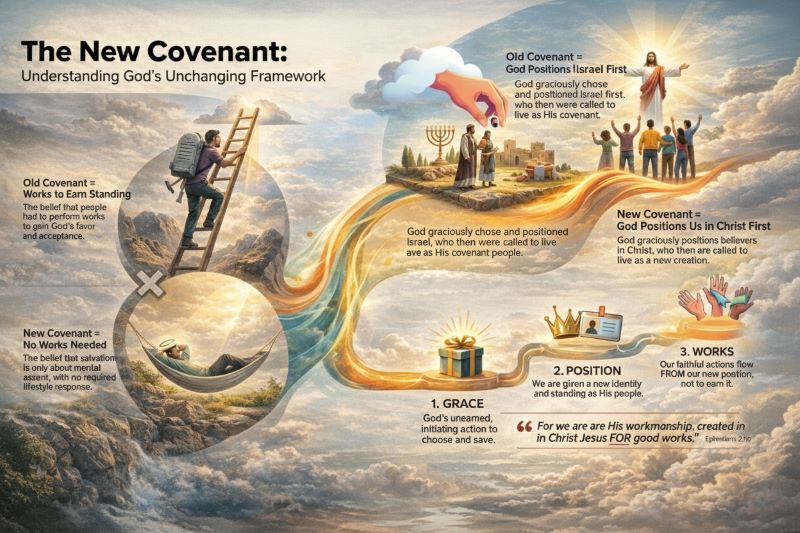
The New Covenant RealityMost Christians misunderstand this structure:

The misunderstanding:
Old Covenant = works to earn standing
New Covenant = no works needed, just believe

The actual structure:
Old Covenant = God positions Israel → they live as covenant people
New Covenant = God positions us in Christ → we live as new creation

The framework never changed. Position FIRST, then works flow FROM that position.

Ephesians 2:10 says it explicitly: “For we are His workmanship, created in Christ Jesus FOR good works.”

Sequence: Grace → Position → Works

We’re not saved BY works (trying to work into position). We’re saved FOR works (positioned so we can function).
Christians have turned the New Covenant into “believe the right things and you’re done” instead of “you’ve been positioned—now live accordingly.” This is why they’re paralyzed in prayer and ministry. They think covenant means “God won’t judge me” rather than “I’m positioned to function as His representative.”

The Pastoral Implications: Liberation Through Emunah

When faith is misunderstood as intellectual belief, it becomes a crushing burden instead of liberating truth.

The Burden of Misunderstood Faith

If faith is intellectual conviction, then whenever you have doubts; and all humans have doubts, you feel like you’re failing at faith. When prayers seem unanswered, when God feels distant, the whisper comes: You don’t have enough faith.

People who desperately need healing pray with all their might, and when healing doesn’t come, they wonder if their insufficient faith was the problem. This is spiritual abuse. It makes faith into a work we must perform.

The Liberation of Emunah

Emunah isn’t about the intensity of your beliefs; it’s about the direction of your trust. It’s not about never having doubts; it’s about remaining loyal even when doubts arise.

Think about Player B. Do you think he never wonders if he’s good enough? Do you think he has perfect certainty?
Of course not. But he shows up anyway. His questions don’t disqualify him.

The Woman with the Issue of Blood
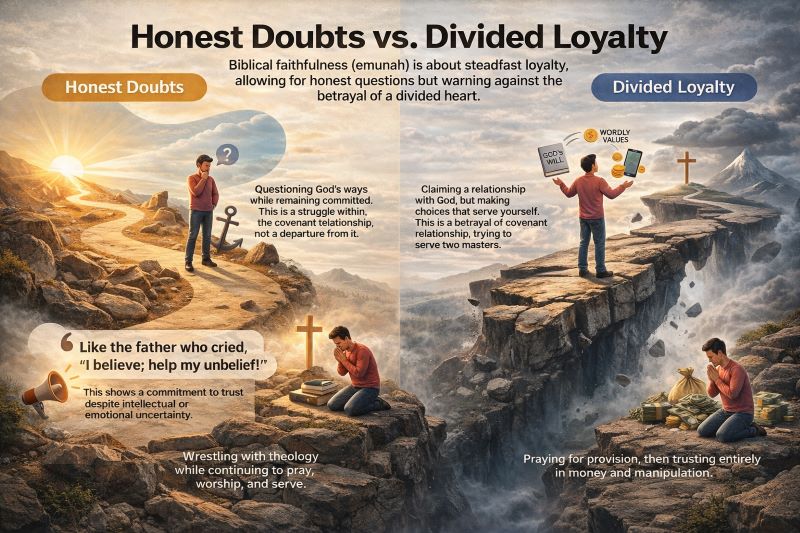
Honest Doubt Divided Loyalty

She came up behind Jesus and touched His garment, saying, ‘If I just touch his garment, I will be made well.’ (Matthew 9:20-22)
Was her faith perfect certainty? No. Look at what she said: “IF I just touch…” There’s uncertainty in that ‘if.’ She had hope, but not certainty. Was her faith divorced from action? Absolutely not. Her emunah compelled her to push through the crowd, to reach out despite her ritually unclean state, to take the risk.

Her faith wasn’t in her head, it was in her feet, in her hands, in her willingness to act on trust despite uncertainty. That’s emunah.

Honest Doubts vs. Divided Loyalty

Honest doubts:

  • Questioning how God’s ways work whilst remaining committed
  • Wrestling with theology whilst continuing to pray, worship, serve
  • Like the father who cried, ‘I believe; help my unbelief!

Divided loyalty:

  • Asking God for wisdom on Sunday, then living by worldly values all week
  • Praying for provision, then trusting entirely in money and manipulation
  • Claiming relationship with God, but choices revealing you’re serving yourself

The first is wrestling within covenant. The second is covenant betrayal.
Emunah allows for questions, struggles, and intellectual wrestling. What it doesn’t allow is divided loyalty; trying to serve two masters.

The Faithful One: Trust Rooted in Character

Here’s the beautiful truth at the heart of emunah: it’s not ultimately about us at all. It’s about God.

Emunah is possible not because we’re capable of manufacturing sufficient belief, but because God is utterly, unshakably faithful.
It is because of Yahweh’s loving kindnesses that we are not consumed, because his compassion doesn’t fail. They are new every morning. Great is your faithfulness.’ (Lamentations 3:22-23)
When we waver, He remains faithful…because He cannot deny Himself (2 Timothy 2:13).
Know therefore that Yahweh your God himself is God, the faithful God, who keeps covenant and loving kindness to a thousand generations.’ (Deuteronomy 7:9)

Think about Player B one more time. His faithfulness to the team isn’t ultimately about his own psychological state. His faithfulness is a response to the manager’s proven character, the club’s demonstrated history, the team’s reliable support system.

That’s what emunah is: showing up faithfully in response to the proven character of the Faithful One. And God’s track record is unimpeachable.

He created the universe and sustains it by His word. He made promises to Abraham and kept every one. He delivered Israel from Egypt. He sent His Son, who proved faithful even unto death, and vindicated that faithfulness through resurrection.

When you feel you ‘don’t have enough faith,’ you’re revealing that you’ve misunderstood what faith is. It’s not a substance you must produce in greater quantities. It’s not psychological certainty you must manufacture through effort. Emunah is choosing, despite your doubts and questions, to show up faithfully. It’s covenant loyalty that remains even when feelings fluctuate. It’s steadfast trust that endures because it’s rooted in God’s character, not your certainty.

We’re not saved by believing hard enough; we’re saved by trusting the Faithful One. The strength of saving faith isn’t measured by the firmness of our conviction but by the reliability of the One we’re trusting.

And He is utterly, completely, eternally reliable.

Conclusion: Which One Are You?

Blondin plus one

Let’s return to Niagara Falls, to the tightrope, to Blondin and the crowd of 10,000.‘Which of you will climb on my shoulders?’

…Silence!

Finally, one man stepped forward. He walked up to Blondin. The great tightrope walker bent down, and the man climbed onto his shoulders. The crowd held its breath as Blondin straightened, turned toward the tightrope, and stepped out over the falls.

One foot in front of the other. The rope swaying. The wind blowing. The waters churning 160 feet below. And on Blondin’s shoulders, a man who had staked his entire life on proven character.
They reached the American side safely. The crowd erupted in applause. Ten thousand people had shouted ‘We believe! We believe! We believe!’ But only one really believed.

This is emunah.

This is what James was defending: genuine emunah cannot exist as simple words. This is what Paul was proclaiming: you cannot earn your way onto God’s shoulders through your own efforts. This is what the marriage covenant reveals: God chose you, not because you earned it, but because He loves you.

When you change the meaning, you lose the message.

When we reduced emunah to intellectual belief, we lost the rich, transformative power of what Scripture actually calls us to. We created anxious believers constantly measuring their faith, wondering if they believe hard enough, feeling condemned for honest questions, like Player A, who owns the jersey but never plays the game.

But when we recover the true meaning of biblical faith, we discover that the Faithful One is calling us not to belief-intensity but to covenant loyalty. Not to psychological certainty but to steadfast trust. Not trying to manufacture conviction that we don’t have but to showing up faithfully…like Player B. The one who has plenty of doubts but trains anyway, demonstrating his commitment by his faithfulness.

The question was never ‘Do I believe strongly enough?
The question was always ‘Will I climb on His shoulders? Will I show up for training? Will I live true to this covenant?’

God is standing there, the Faithful One, proven trustworthy through millennia. He’s demonstrated His character through creation, through covenant, through the cross, through resurrection. His track record is unimpeachable. And He’s offering to carry you across.

Not because of who you are, or what you can offer, but because He is faithful, because He is trustworthy. It’s because His character has been proven and His love is steadfast.

Ten thousand people stood on the ground shouting their agreement, certain they believed, convinced they had faith.
One man crossed the falls on Blondin’s shoulders, his life staked entirely on proven reliability.

Which one are you?

The crowd, shouting ‘We believe!’ from the safety of distance?

Or the one who shows up, who steps forward, who stakes everything on the proven character of the Faithful One?

This is not a question about how strongly you believe. It’s a question about whether you’ll trust yourself completely; your life, your future, your security, into the hands of the One who has proven Himself utterly faithful.

That’s emunah…That’s faith.
Will you?

Leave a Reply

Your email address will not be published. Required fields are marked *

More Articles Like This

Project Gerar

We believe much of the Hebraic roots and Jewish context that shaped the early Christian faith has been buried under layers of tradition and misinterpretation. We explore the original meaning of Biblical Hebrew words, study Torah as God’s instruction (not law), understand how Sabbath, biblical feasts (moedim), and covenant formed first-century believers. Seeking to remove centuries of accumulation to learn to walk ‘the way’ of the first disciples; following Yeshua (Jesus) the Messiah, empowered by the Spirit.

We’re not adding Jewish flavour to Christianity. This is a work of restoration; a return to the ancient paths. The water is still flowing.

Let’s dig together to uncover those wells.

Stay Connected

Sign up to receive teachings, updates, and resources by email. You can unsubscribe at any time using the link in our emails. By submitting this form, you acknowledge our Privacy Policy.
Your information is securely stored and processed through our email service provider (Mailchimp).
We never sell or share your personal data.

© 2026 Project Gerar. All Rights Reserved

Contact Form

Please complete the form below to contact us or email: contact@projectgerar.com

By submitting this form, you acknowledge our Privacy Policy.